
Hellenic Mountain Race: A retrospective study on resilience.

Every story starts with an intro and ends with a clumsy return to reality.
May has been marked in my calendar as Hellenic Mountain Race month since 2023 — the year I was introduced to ultra-cycling and mountain racing. It was also the year I took up mountain biking and got immersed in the world of self-supported bikepacking races.
But let’s back up a bit.
The Hellenic Mountain Race (HMR) is a self-supported mountain race that stretches across Greece. It would be easier to call it a bicycle race, but since it doesn’t tick the boxes of a “traditional” one, mountain race fits better. It is an adventure through Epirus and across the Pindus range, finishing in the coastal town of Nafpaktos: endless peaks, deep valleys and a mostly off-road route of almost 900 km with 30,000 metres of climbing.
Riders who choose to take part must be self-reliant and ready to tackle, within seven days, a route that unfolds along what we call the spine of Greece. In this behemoth of a race, they navigate a fixed route through three checkpoints, where they stamp their brevet cards*, before reaching the finish line.
Each rider makes their own decisions and carries everything they need; no outside help is allowed. The race takes place in remote wilderness, and the clock never stops. Everyone rides the same route, through the same checkpoints, to the same finish line — if they manage to complete this epic adventure. What is remarkable is that each rider has a completely different experience, depending on when and where they are on the route. Extreme weather is common, the logistics demand extensive preparation, and the navigation has to be rigorous.
Oh, and there are no prizes for winners or finishers.
Fun, right?
Chapter 1: The Long Way Round
It’s a Wednesday, a few days before the fourth edition of the Hellenic Mountain Race, and I’m at the bus station in Athens, waiting to board. It’s been a year since I finished the race and three since my first, clumsy attempt.
This year I’m not racing, though. With four stamps on my brevet card from 2025, I’m happy to have this one done and dusted — and excited to volunteer at this year’s edition, at Checkpoint 1.
Earlier in the year, Kostas and I made a plan to meet halfway and ride our bikes to the checkpoint. Neither of us racing, both volunteering, both eager to turn the trip into an adventure. After all, this is HMR week — a celebration of bicycles and resilience — and in a few days 170 riders will set off on a monumental journey.
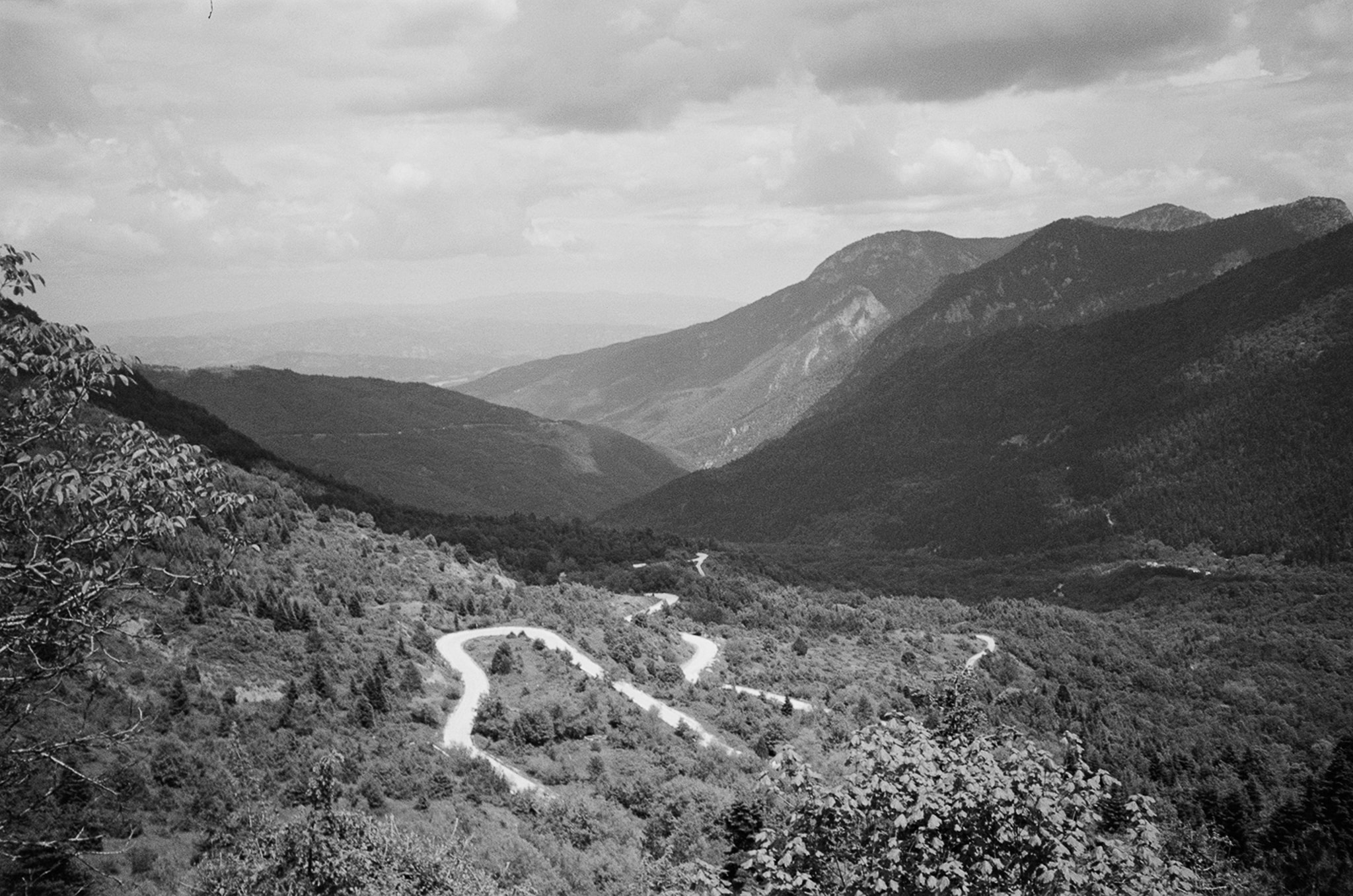
Checkpoint 1 sits at the foothills of Smolikas, in the village of Pades. The mountain will be our home for the next couple of days. When we finally get there, that is.
For now, we’re in Kalambaka. The bikes are loaded and we’re ready to head out.
Leaving Kalambaka and the rock formations of Meteora behind, we have to pass through the beautiful villages of Aspropotamos and climb Trigia to drop down the other side of the mountain.
Slow pace. Small talk. It’s a good day, and I’m happy to be out there. We ride along the river.
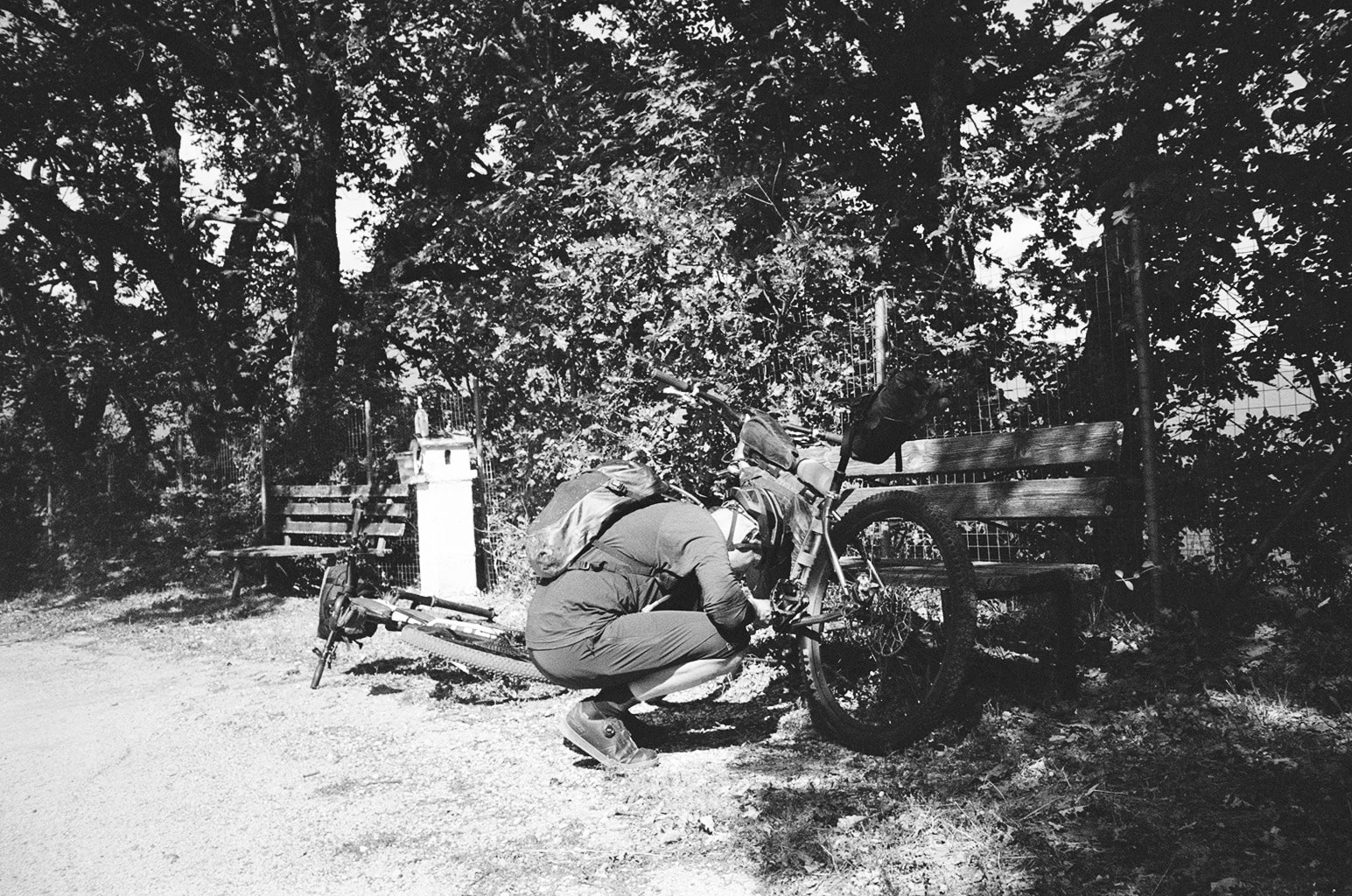
The forecast calls for rain in the afternoon, and as we reach Palaiochori I can see clouds rolling in. A quick stop at Diavaine, the local taverna, for ice cream and coffee. Chatting with the locals. It’s already hot and humid — the perfect recipe for a storm. We have to go.
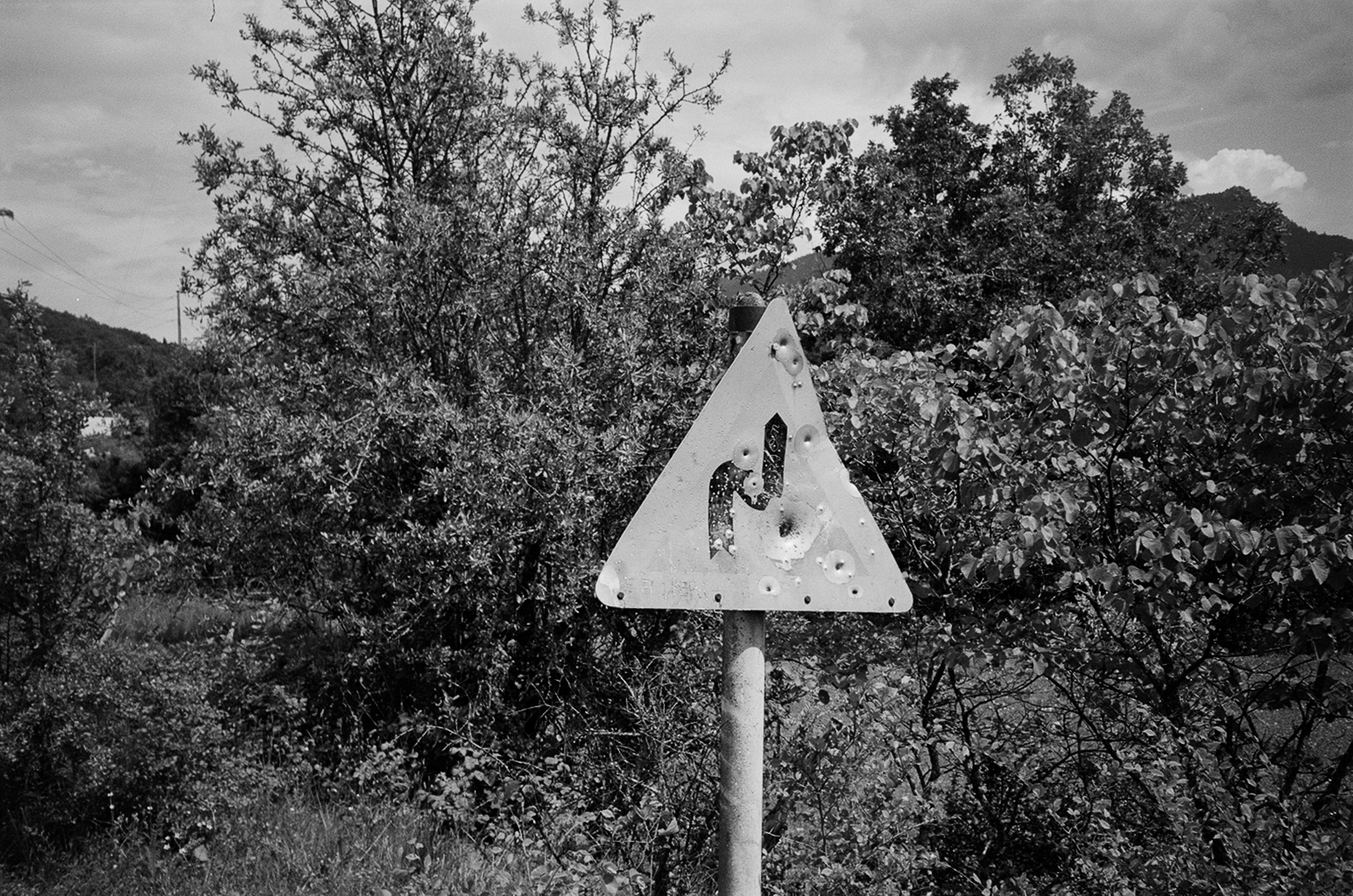
Leaving any Greek mountain village means forest roads with steep gradients, road signs riddled with bullet holes, unreliable mapping and vague trails. Exactly what we came for.
Not many kilometres later, we find ourselves deep in the forest, just below the tree line. A dense canopy overhead — and, as if by magic, the trail disappears.
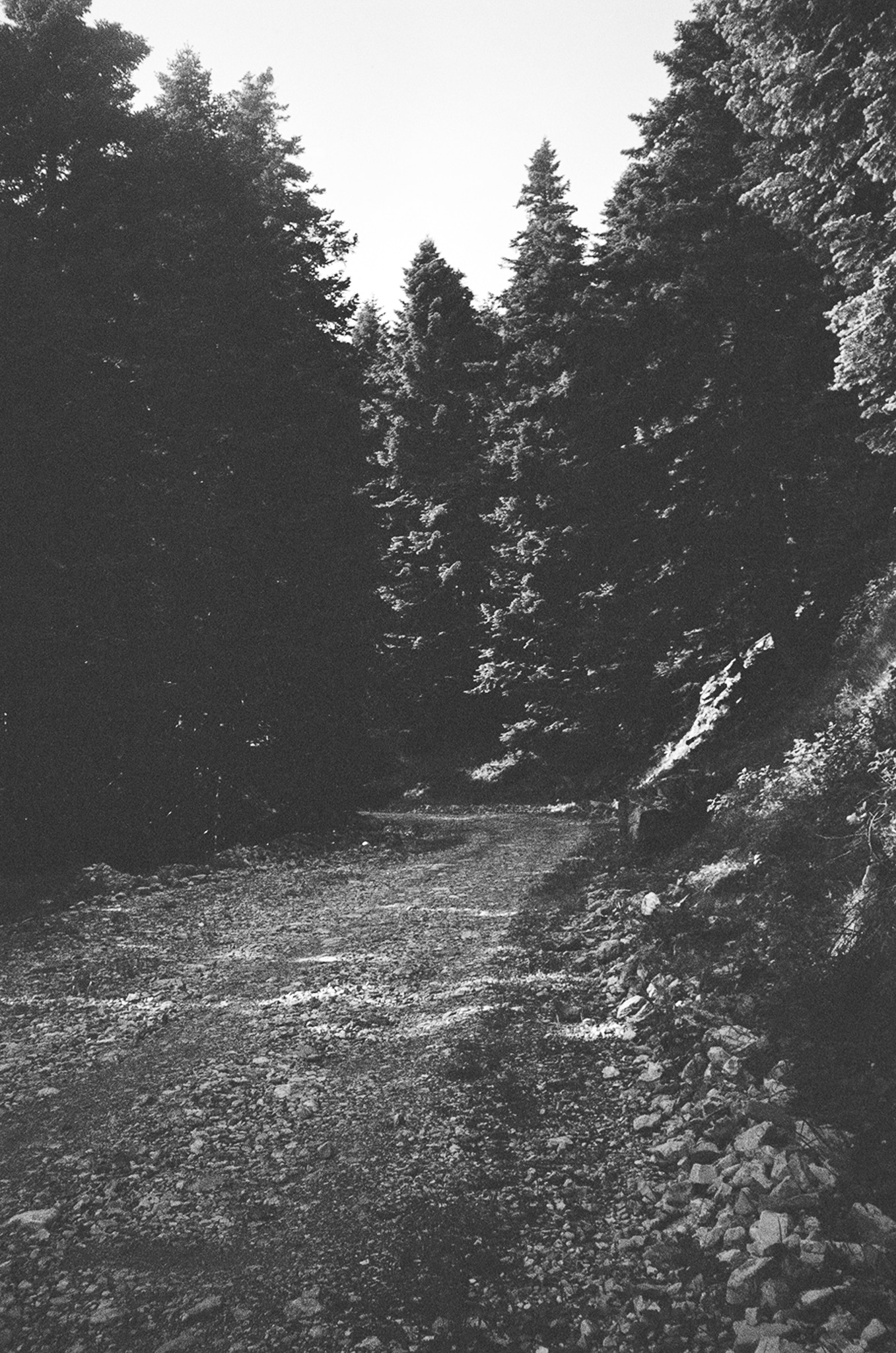
Not riding anymore: pushing the bike. Inch by inch. Every step takes us deeper into the forest. A ditch. A fallen tree trunk. The vague trail we were following no longer exists.
Not pushing anymore: carrying the bikes. It looks like we’re walking inside a dry stream bed. No sign of the trail. Step by step, the terrain gets wilder and steeper. Now we have to carry the bikes downstream. One of us climbs down the drop; the other passes the bikes down.
This is what’s called type 2 fun.*
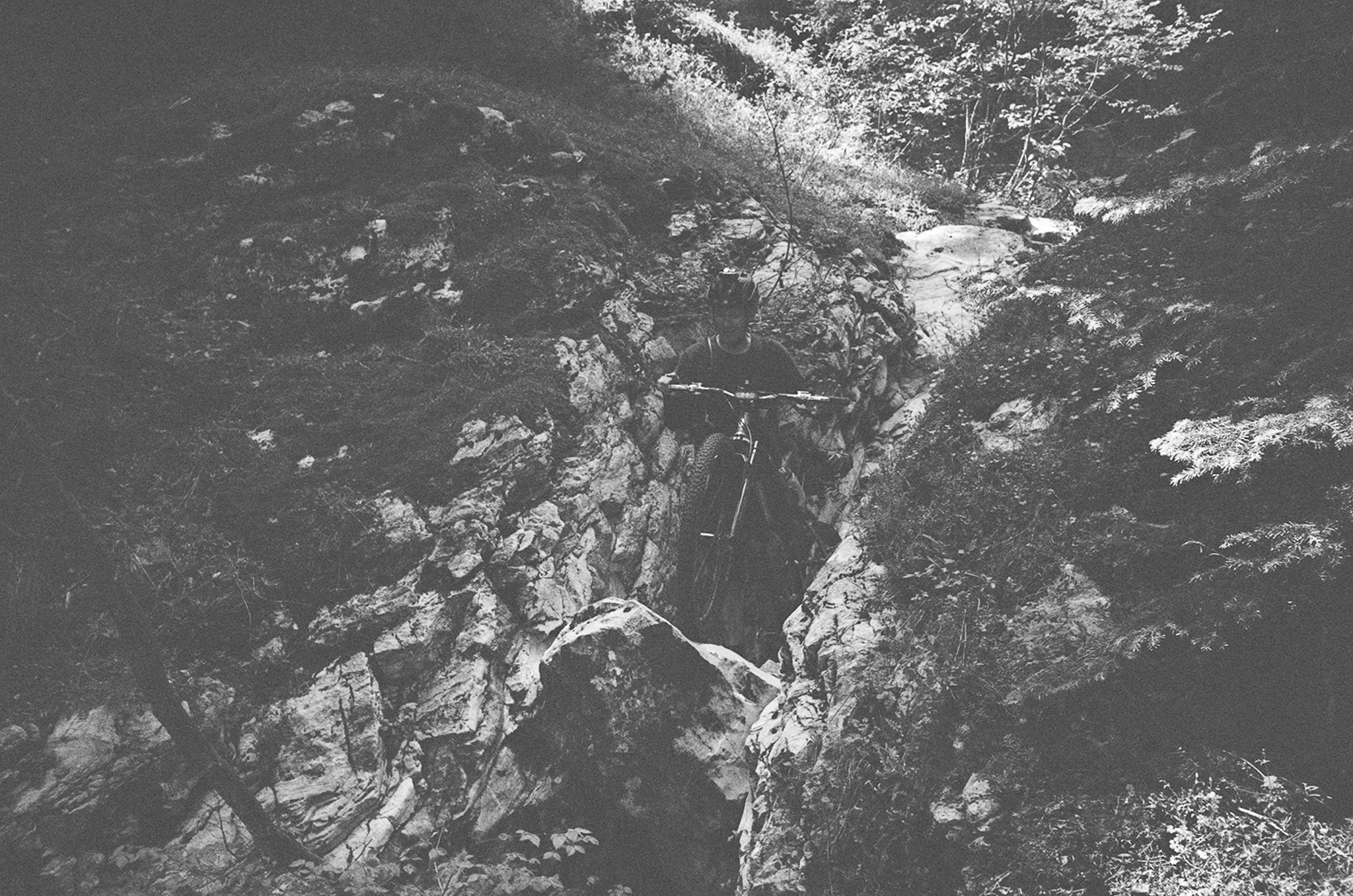
Progress is slow. Clouds now linger overhead, and thunder rumbles from behind the peak. The terrain keeps getting steeper, and it looks like we’re heading into a dead end. We look at each other, then at the massive drop ahead, and we both know we’ll have to backtrack. The heavy bikes will have to be carried back up to the trail so we can reroute to the village.
An hour later, we’re back at the taverna. With only a few hours of daylight left and a thunderstorm brewing, we call it a day. Christos, a former mayor of the village, takes us to his trailer park, where we decide to spend the night and start fresh in the morning.
The locals tell us about people getting lost up there because they trusted Google Maps — or any map, for that matter. Hikers, bikers, cyclists: all of us follow the right wrong path and end up in the same situation.
This all feels too familiar.
We hang out on the porch for a few hours, and when the sun sets we go to bed. My mind is racing as I lie down. Flashbacks from last year’s race: riding, pushing, finding a way out. The sun setting over distant peaks, or rising at the top of an excruciating climb. Highs and lows. It’s all part of the game.
Nelson once told me, “Everything is fun if you decide it is.” That’s a mantra now.
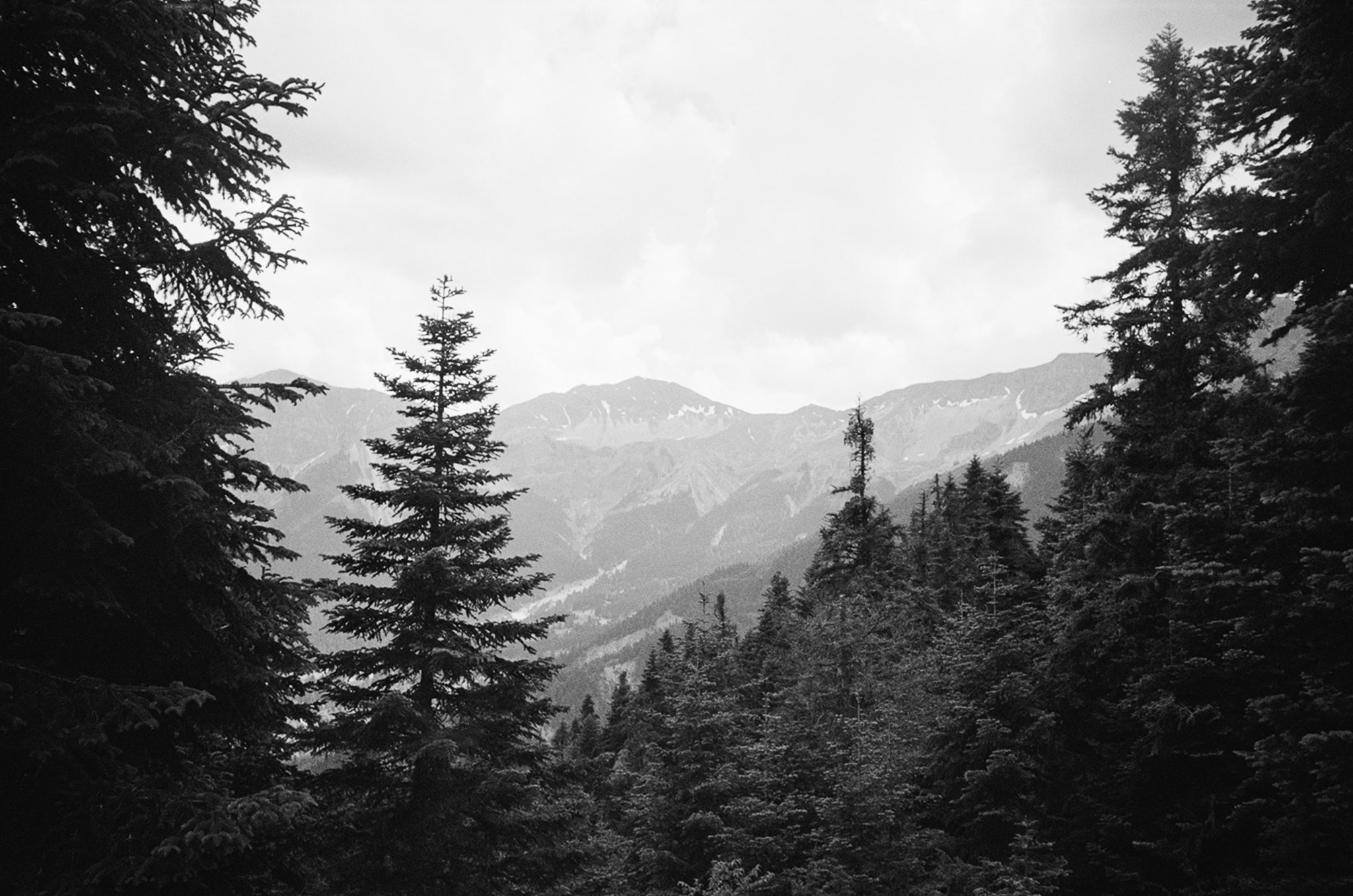
A new day. We wake at the break of dawn. The trailer is cold and damp; it rained during the night, and we could hear the pitter-patter of drops on the steel roof. We pack the bikes and head out.
Fresh bear footprints. A subtle reminder that we are never alone in the backcountry.
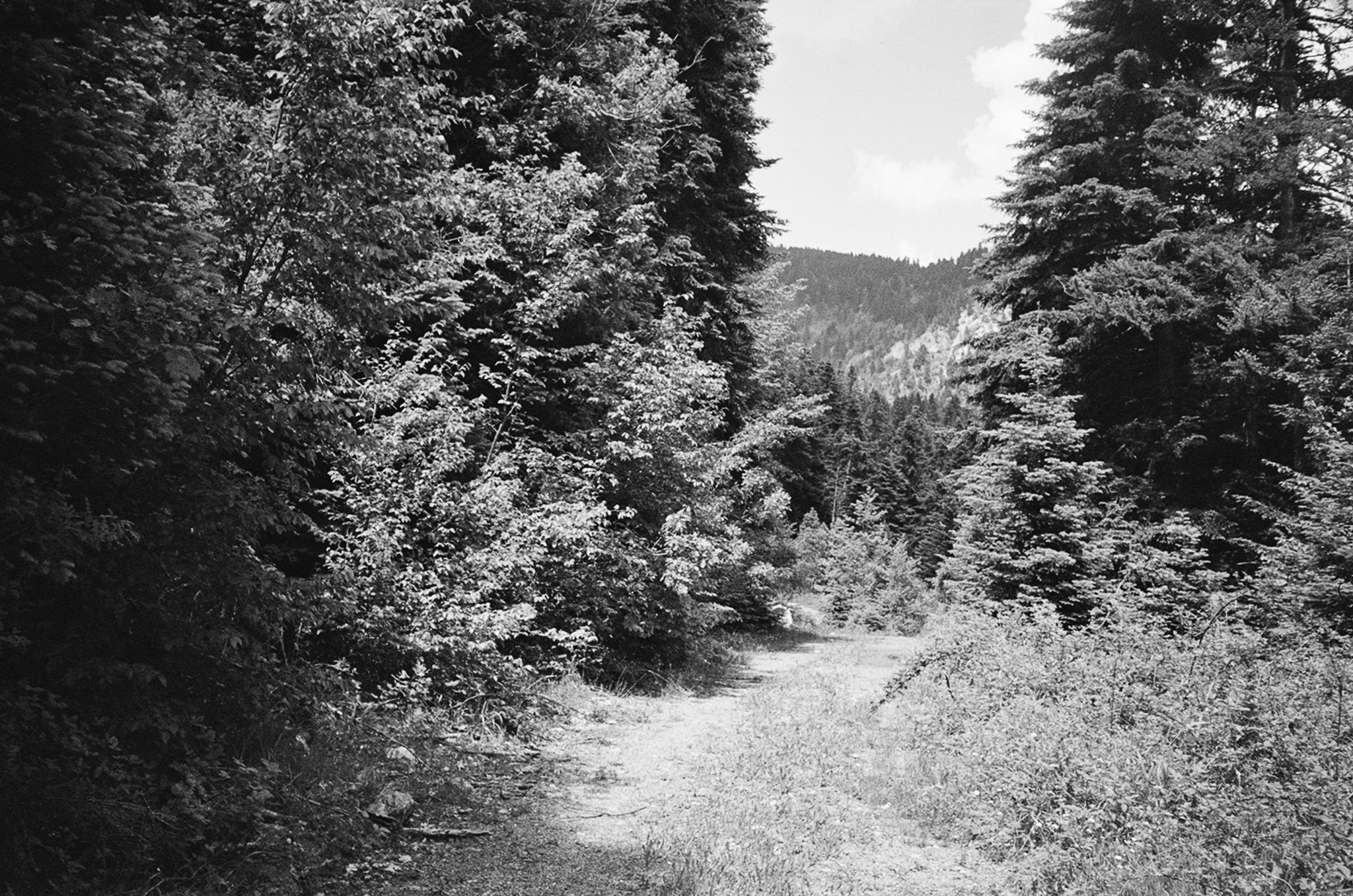
A few hours later we’re above the tree line, reaching the top of the pass.
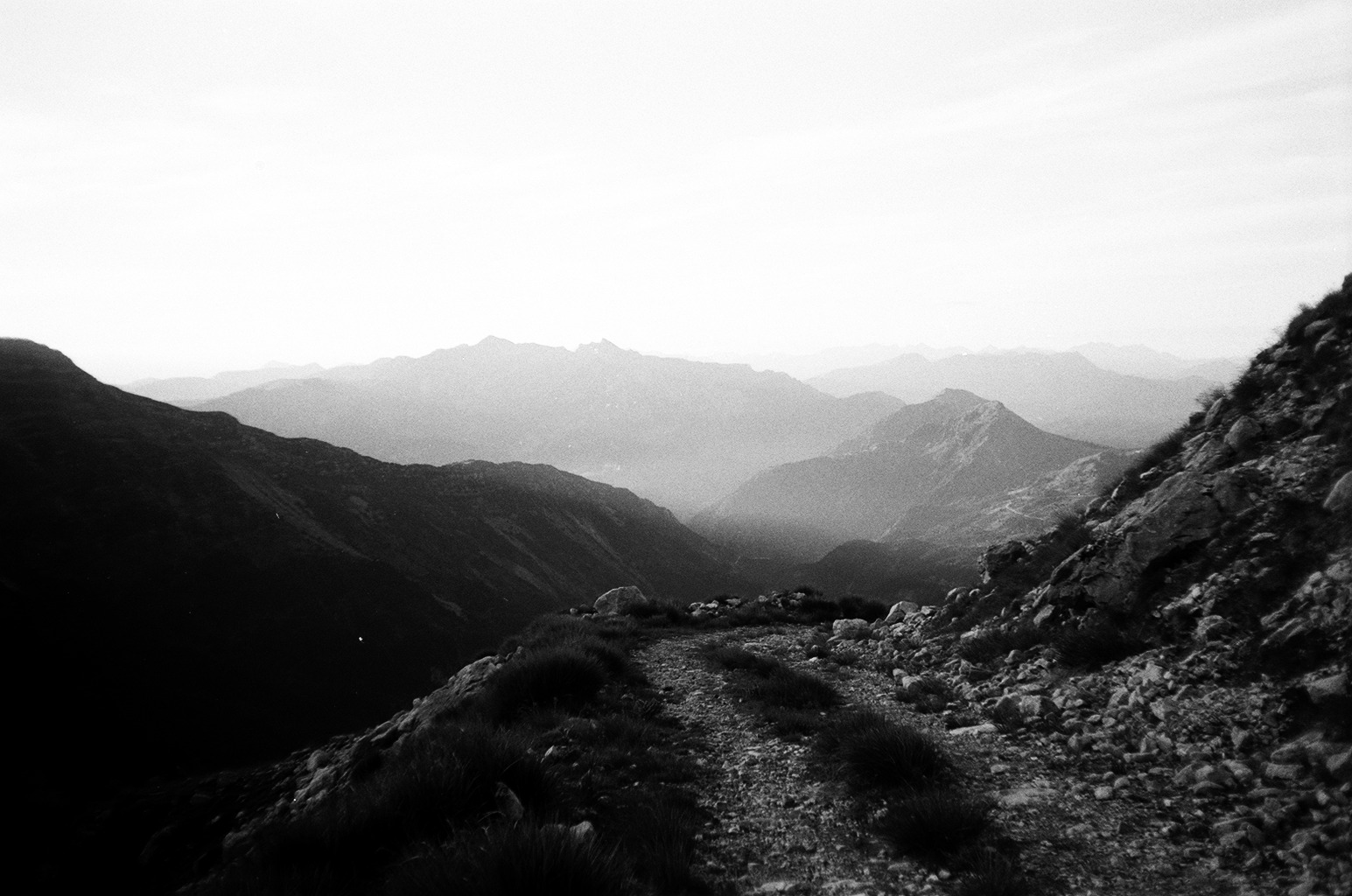
A little church. There is always a little church at the top of a pass. We stop for a while, but we still have a long way to go, so we have to keep moving.
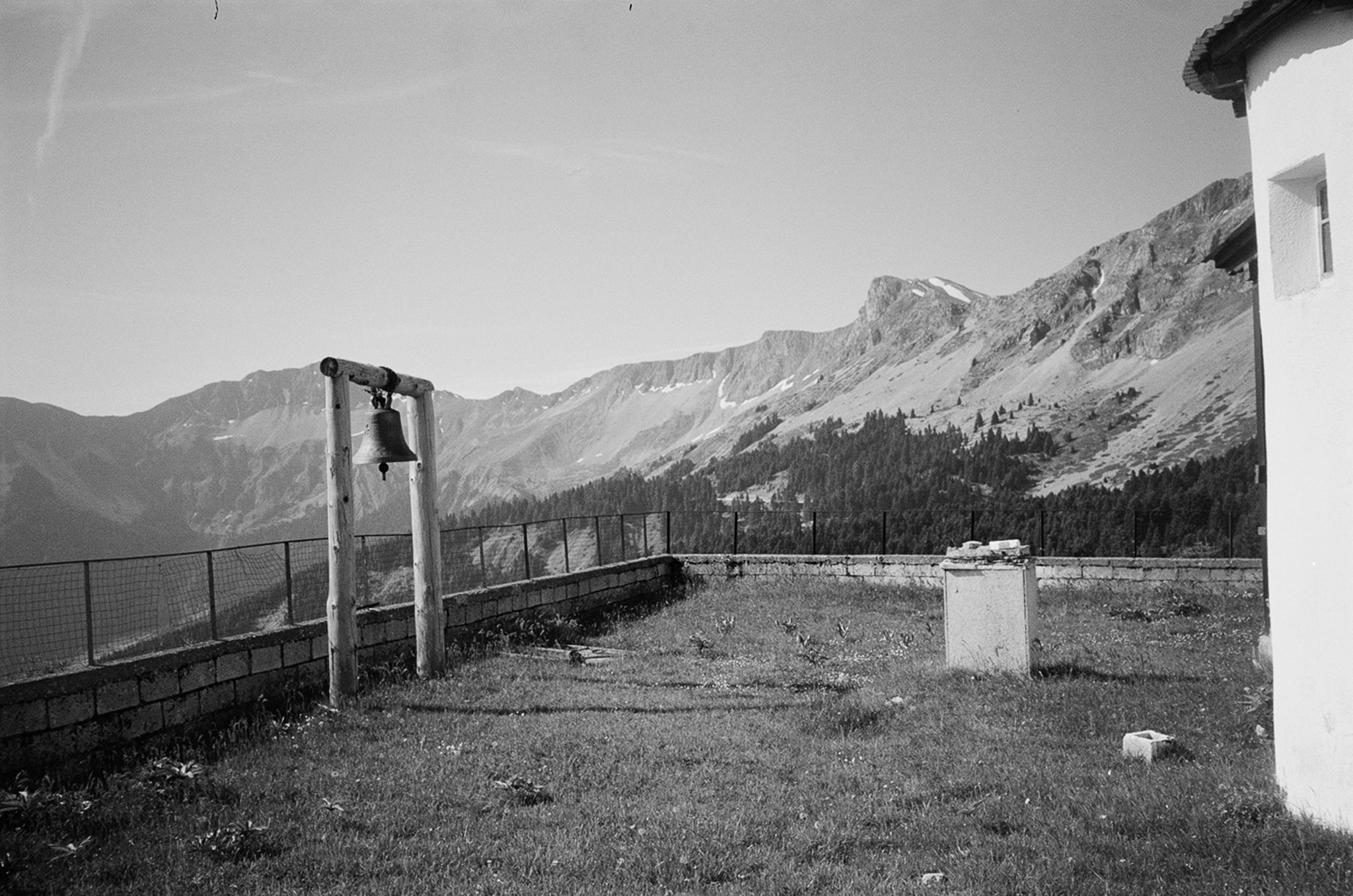
It’s a 10 km descent down to Krania. Less than 30 minutes later we reach the village of Doliana.
Something feels off. Something feels wrong. I usually keep track of all my stuff when I travel by bike, but it seems I got too relaxed and did the unthinkable: I left my hydration pack in the churchyard.
I freeze. The realisation hits hard.
When I break the news, Kostas seems unbothered. “Let’s go get it,” he says calmly. That’s a pretty big climb back to the top. I feel guilty and offer to go alone. He laughs and tells me he’d much rather ride with me than wait three hours on his own.
A lesson learned. Mistakes happen, and there is always a choice. How you deal with them is up to you.
It’s almost noon and the temperature is rising. Climbing the same mountain again feels like an ordeal. Maybe a local could drive us up and save the day — after all, we’re not racing. So I ask around. An old-timer politely declines: “I’m too old to go up there.”
Back in the village, I spot a taverna. Why not? I leave my bike outside and walk in. As I struggle to explain, the owner listens carefully but stays silent. Then he nods upwards.
As I turn around, mentally preparing for the long ride up, I hear him say: “My car is outside and the keys are in it. You know how to drive, right?”
What are the chances? He knows nothing about us. He’s never seen us before.
“Are you sure?” I stutter.
“Be careful,” he says. “The road has washed away at the top.”
And just like that, we’re in a 4×4, in full Lycra, still wearing our helmets, driving up the same rugged road we’ve just descended on our bikes. At the top, I see my bag on the bench, grab it and drive back down to the taverna. We order coffee, offer money for fuel, and munch on tomatoes and goat’s cheese before heading out again.
My faith in humanity is restored every time I travel through the backcountry. The unconditional kindness of strangers. That is not a given in a big city.
We’re still riding along the river. The roads are washed out. Halfway there, but nowhere near. We’ll get there, all in good time. For now, we’re cycling in circles, rerouting again and again and again.
Chapter 2: The Checkpoint and a Storm Brewing on Higher Ground
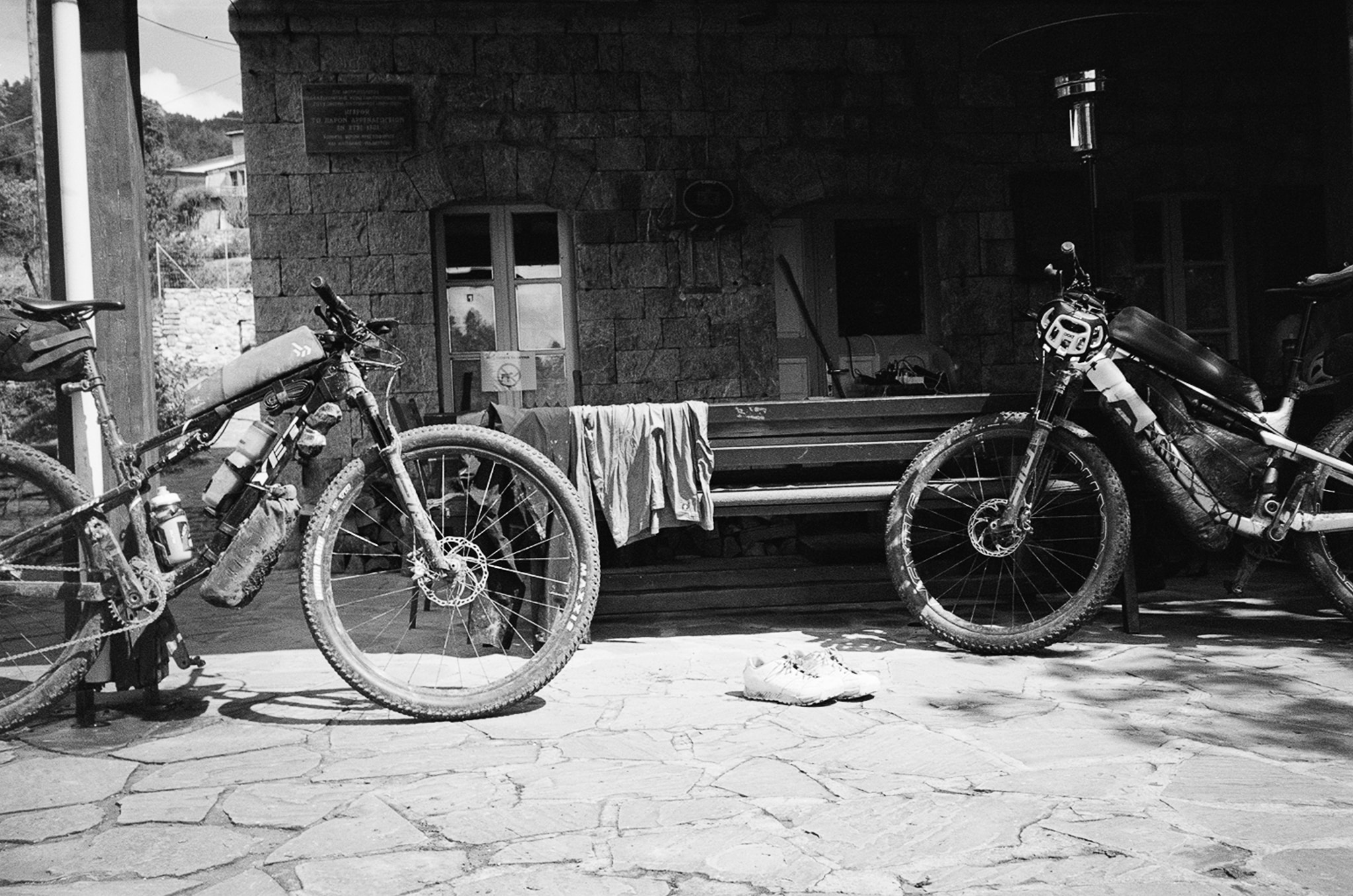
Fast forward to Saturday. Smolikas is buzzing: the race has started. CP1 is open, and riders are scattered all over the course.
Small talk, as we frantically refresh the map and watch the first riders appear. Everything is tracked live, and each rider shows up as a dot. We call it dot watching. It’s addictive.
Almost ten hours into the race. We’re expecting riders all night, and for the next couple of days this will be our home away from home. A storm is in full force as the first riders close in. It’s just after nine in the evening.
To reach CP1, a rider has to cover 237.8 km. Every one of them must push their bike from the foothills all the way up to the Dragon Lake of Smolikas, before descending a singletrack down to Pades to get their brevet card stamped. It’s a brutal 10 km hike-a-bike followed by a very technical descent. All of this in a storm. In the dark. The mental toughness it takes to keep pushing is huge.
Then comes the reward: a trail snaking down the mountain. A warm plate of food. Coffee and drinks. A bed and a shower. A much-needed break before heading out into the unknown once again.
Only twelve hours after the start, the first rider rolls in. He’s calm. Orders food. Stays for half an hour, then heads back out into the depths of the night.
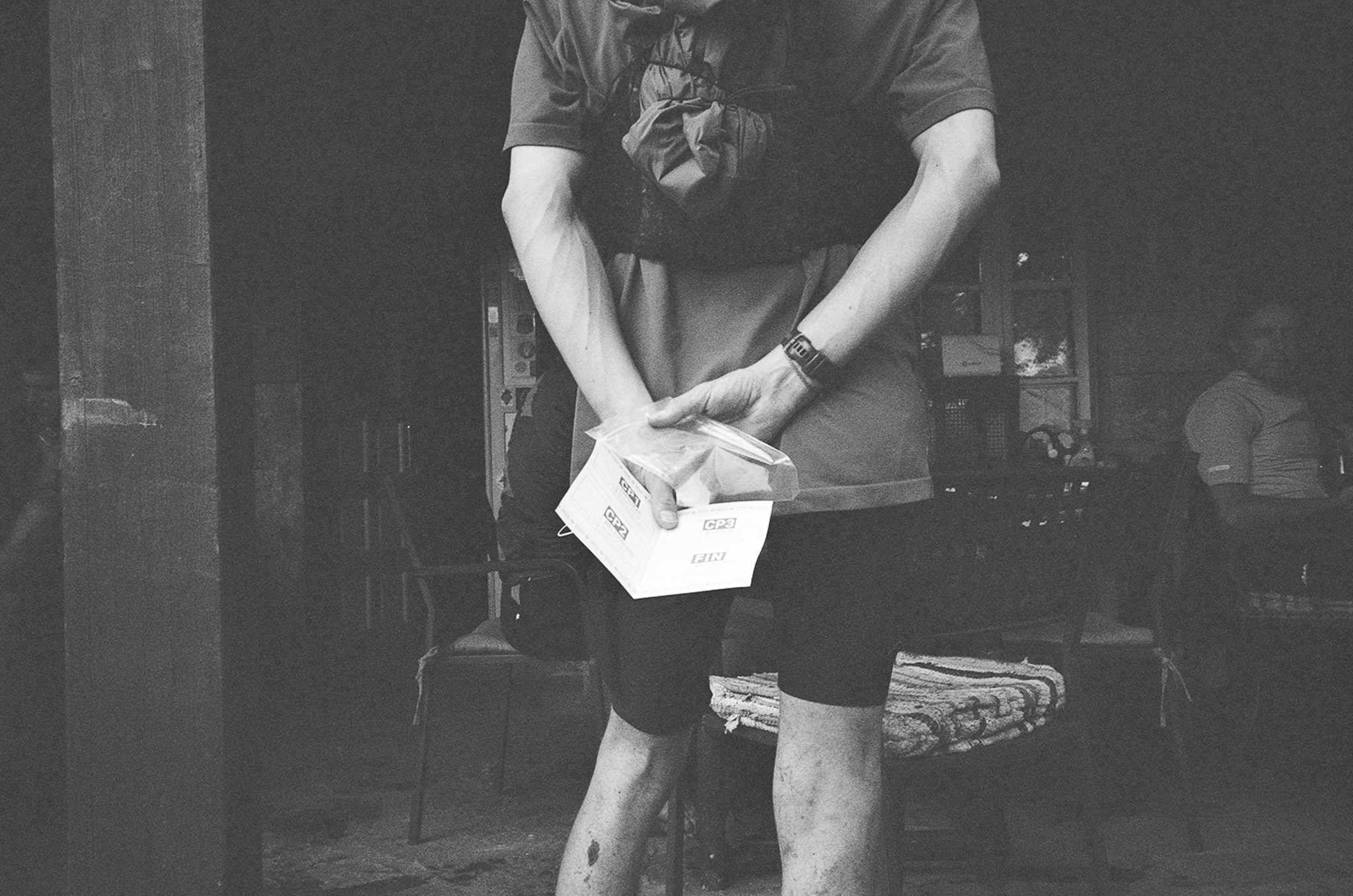
Riders keep coming in all night and all day. I snap a few portraits. Some riders are in great shape; others are shell-shocked. Everyone has a story of their own.
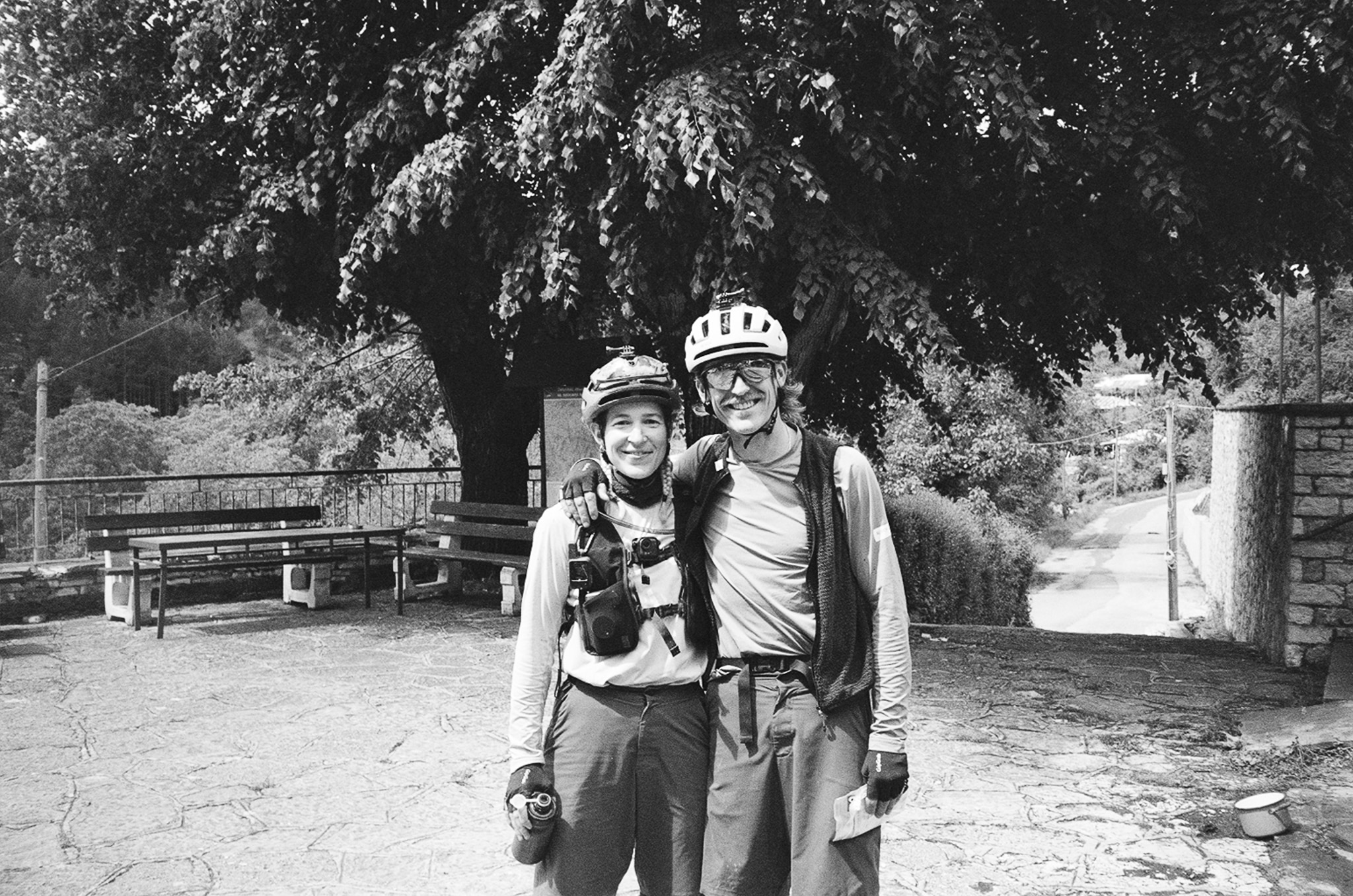
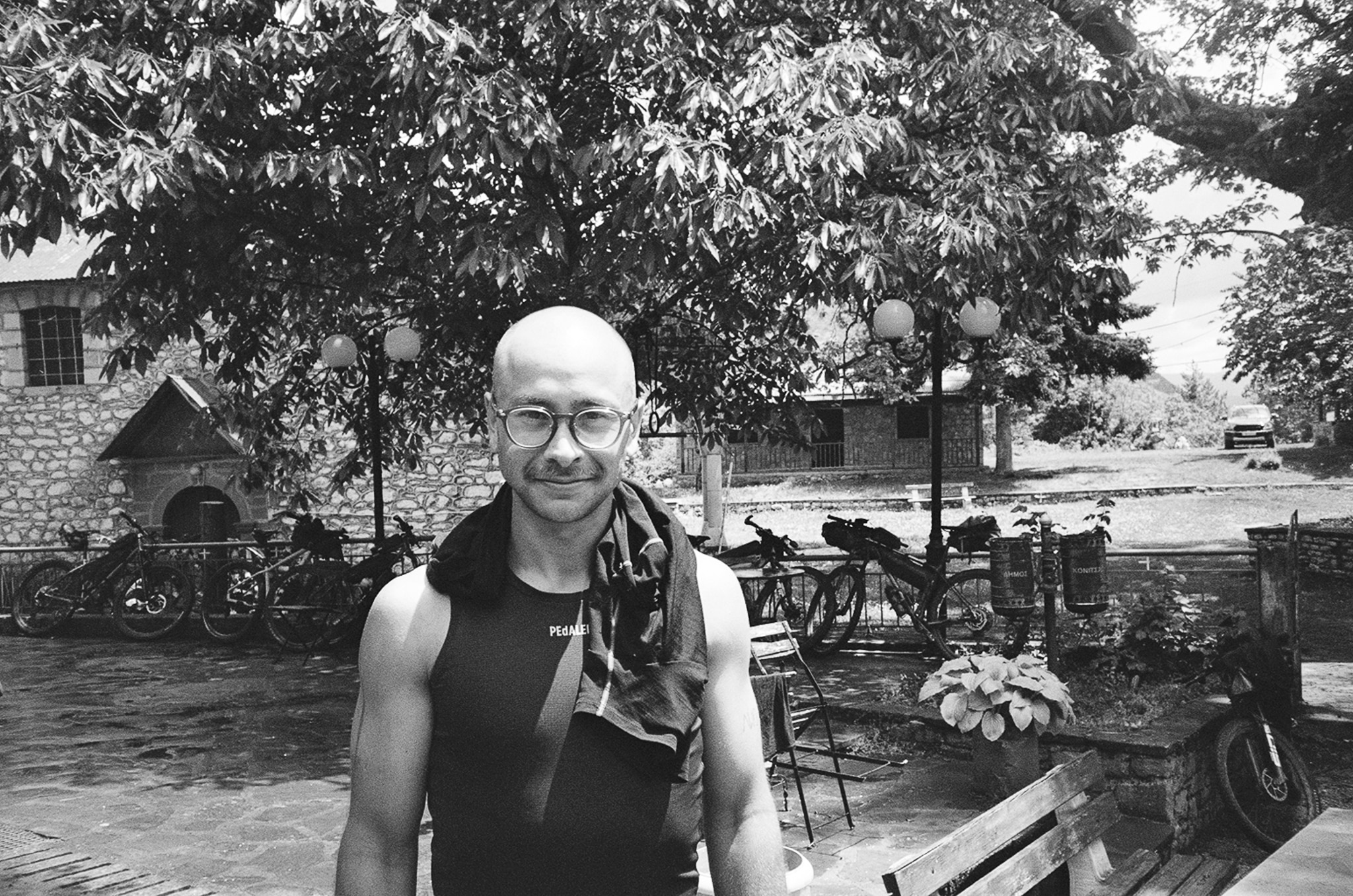
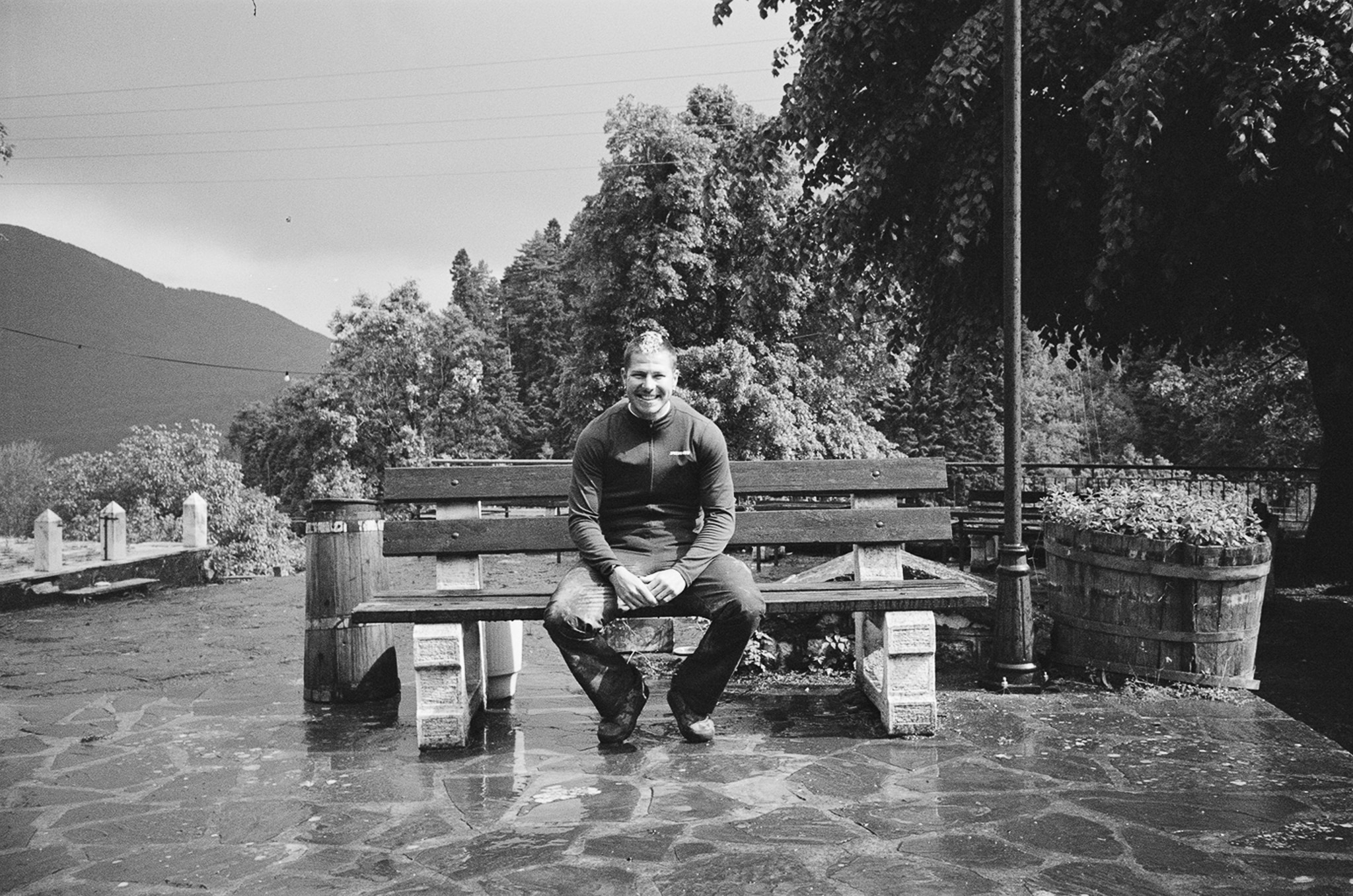
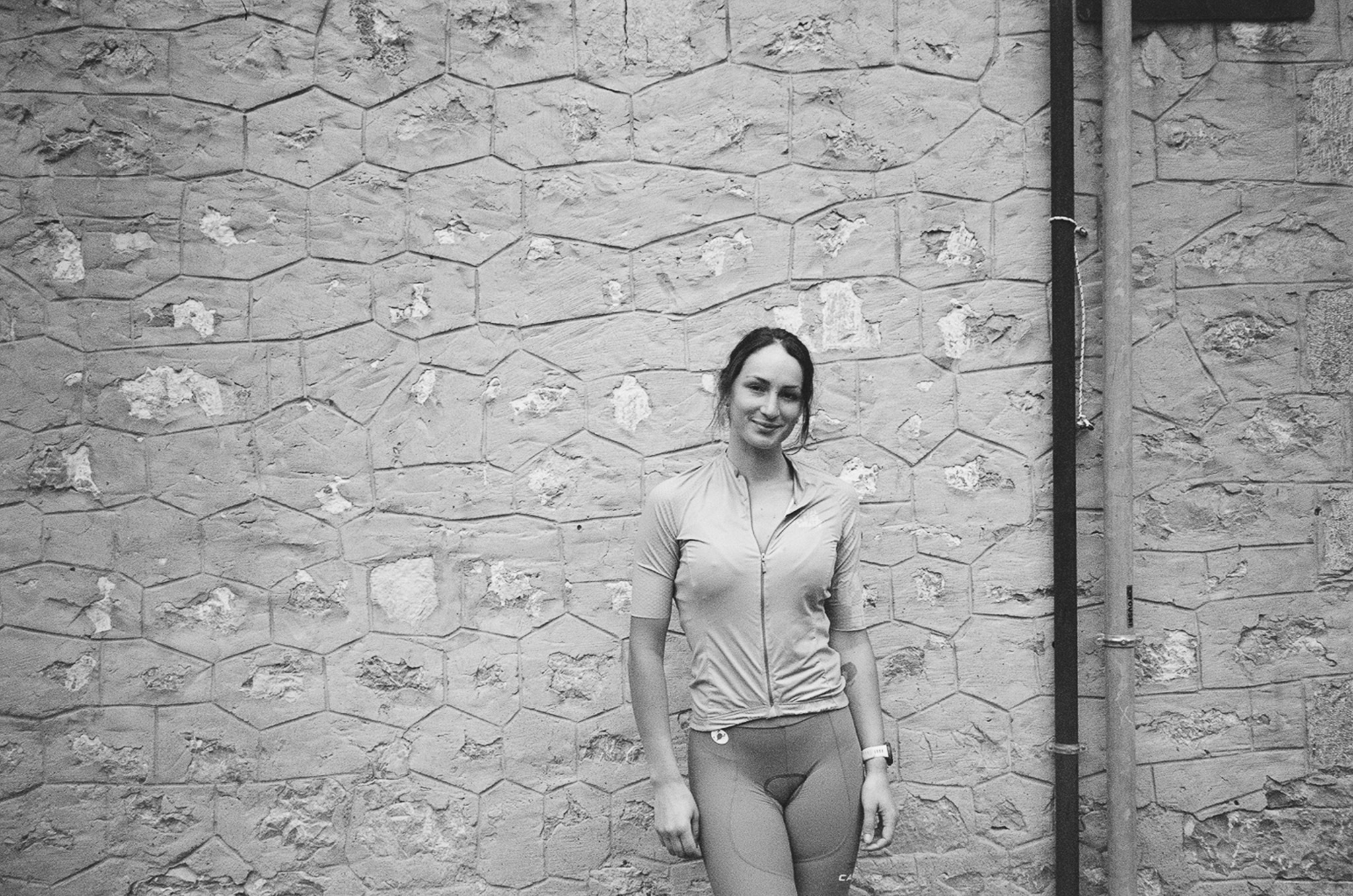
The wood-burning stove in the middle of the room draws most of the crowd. Riders dry their soaked clothes and shoes and make decisions. Stay for the night? Keep going? The kitchen serves food all night: coffee, soft drinks, pasta. The amount of food everyone devours is almost comical.
More riders. More stories. Someone got caught in the storm. Someone else crashed — a broken arm and a bloodied face. It’s amazing how each person deals with whatever is thrown at them. I’m impressed, and reminded of what this is all about. Resilience. Figuring things out. Learning how far your body and mind can take you. The rest is just pedal strokes.
It’s 5 a.m. now, and Jeff, another volunteer, takes over the checkpoint as I head back to the dorm to sleep. I can’t. I pull out my phone to dot-watch, and as the screen lights up the room, I think back to parts of my own race and relate to so many of the riders I’ve met over the last few hours. Then I shove the phone under my pillow and close my eyes.
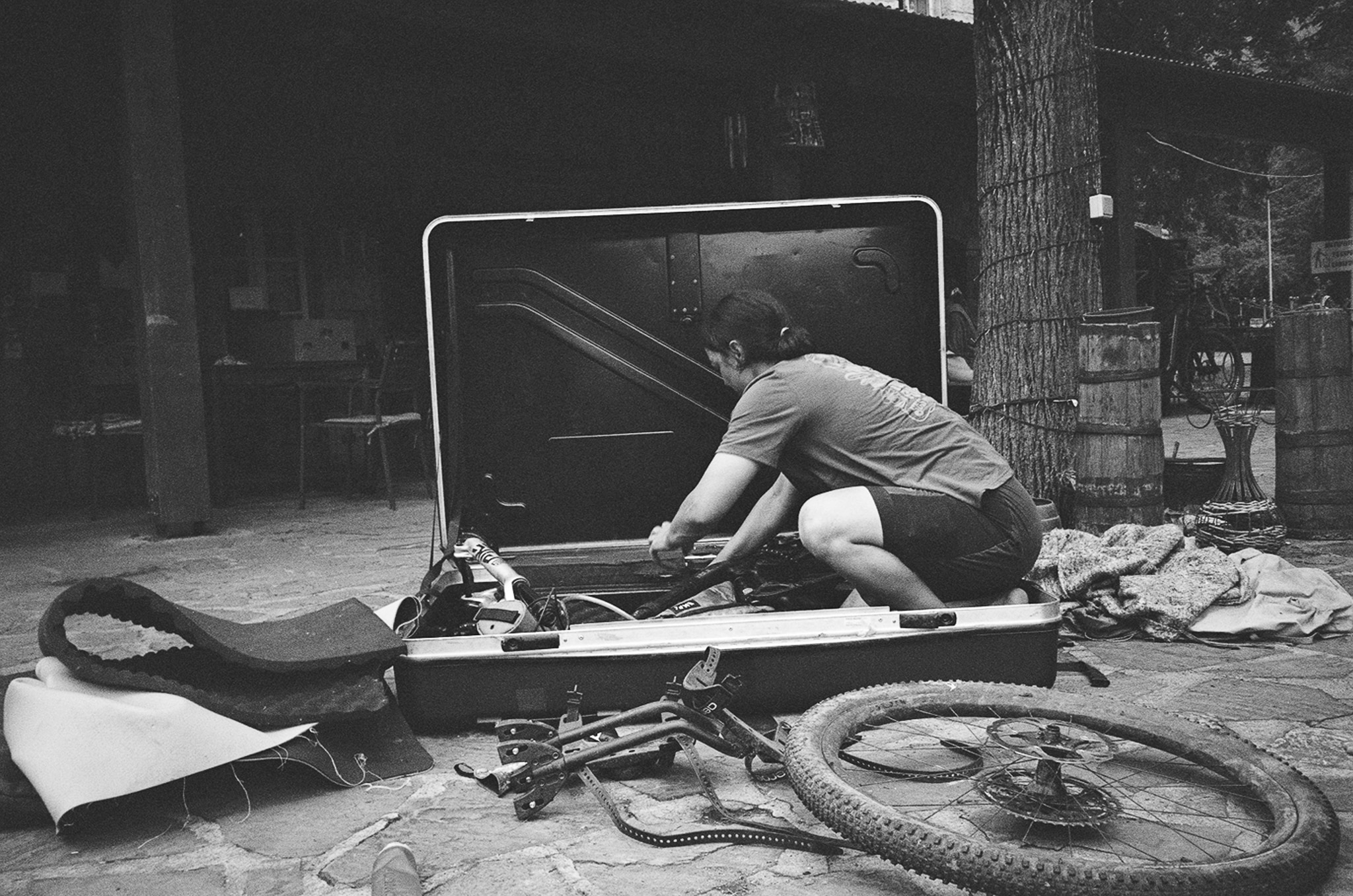
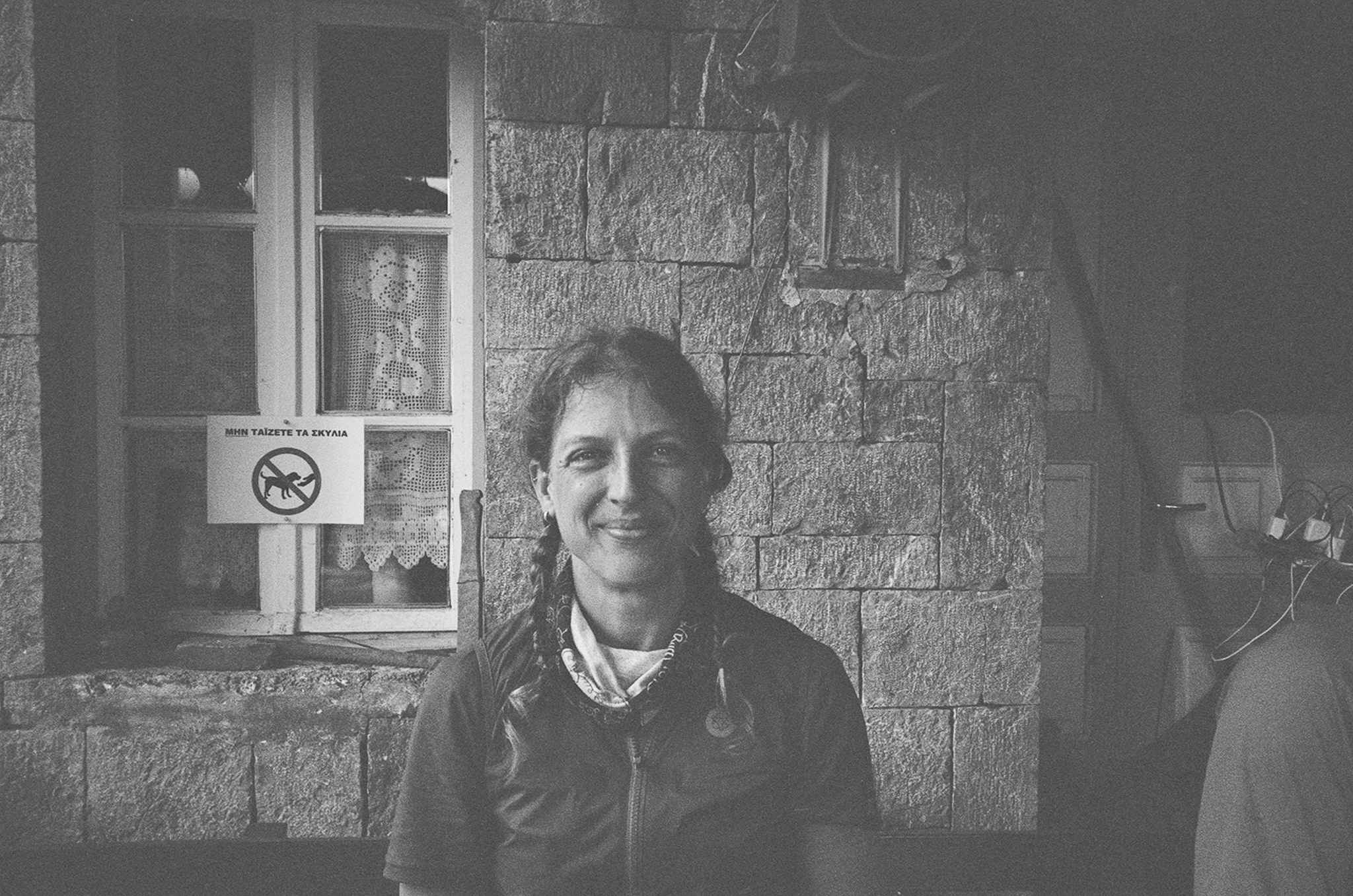
The next day, more riders arrive — some alone, some in small groups. Some scratch from the race; others carry on. There’s a pattern: riders come in, eat their body weight in food and head out. Some stay for a little sleep; others stuff their pockets with snacks and leave straight away.
Comfort and warmth can be tricky. They remind you that you don’t have to be out there. But the clock is always ticking, and you have to cover as much distance as possible if you want to cross the finish line. The longer you stay inside, the harder it is to go back out into the cold. Your body relaxes and your mind starts playing tricks.
“Why go out there?”
“You’ve done enough already.”
“This isn’t fun.”
“You could do with a couple of hours’ sleep.”
Tiny voices, bursting the bubble you’ve built around yourself. This is where the whole thing becomes mental. Out in the field, small problems seem unimportant. It’s one pedal stroke after another until you’re done.
CP1 will close soon, but the race goes on for another five days. Five days of ups and downs, highs and lows. Every rider will go through a rollercoaster of emotions. Some will make it; others won’t. It’s never easy to quit — nor is it easy to go back out there. Either way, every effort is applauded.
They say the first win is making it to the start line. After that, it’s an amalgam of training, luck and headspace.
Chapter 3: Back in the Saddle and the Clumsy Return to the City
Monday. The checkpoint is closed. We make breakfast, drink a couple of cups of coffee and plan our ride towards Grevena — and the imminent return to reality.
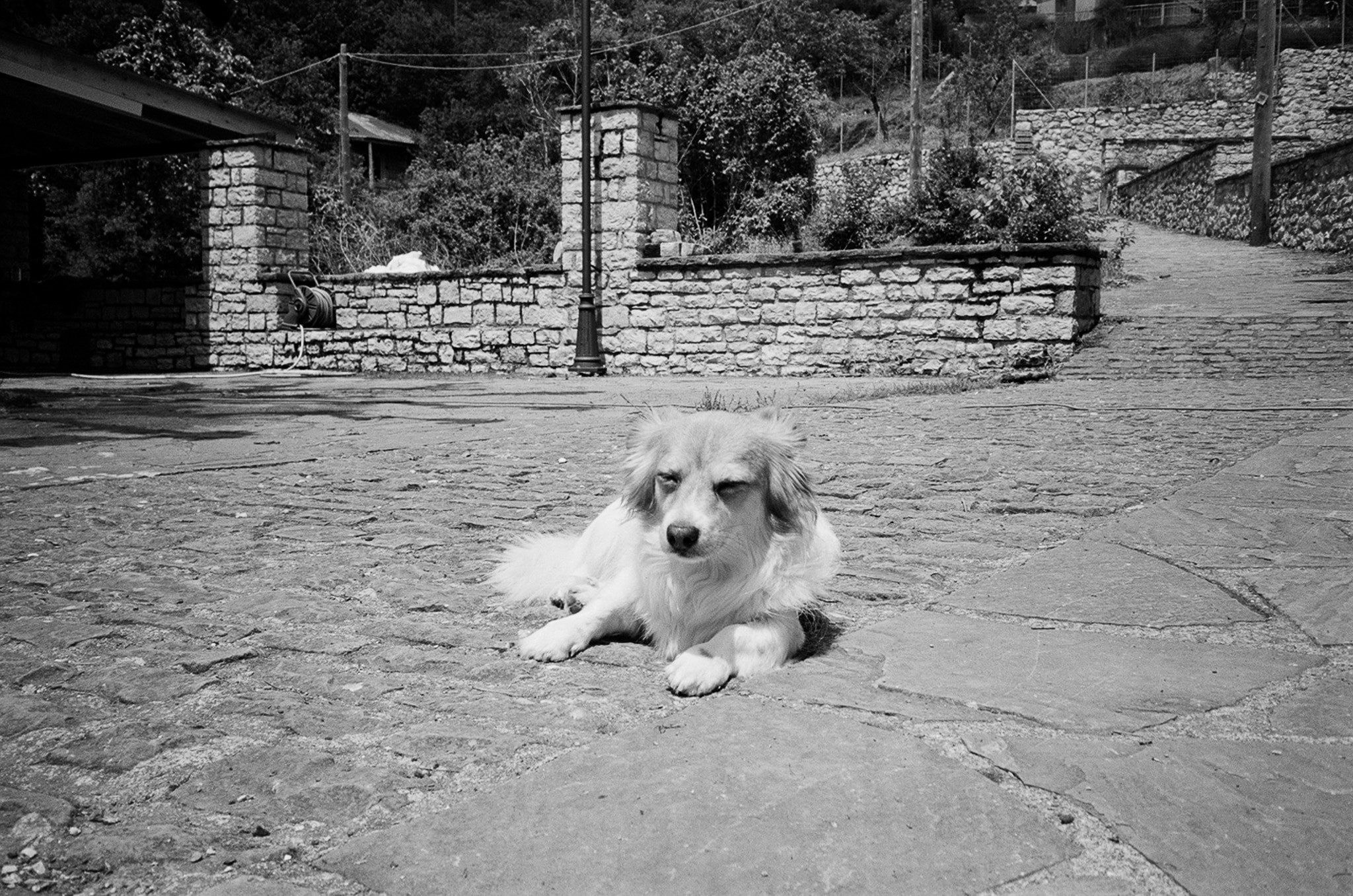
Our route takes us east, towards Distrato and Valia Kirna. It’s my first time passing through, and I’m humbled by the density of the valley. It feels impenetrable.
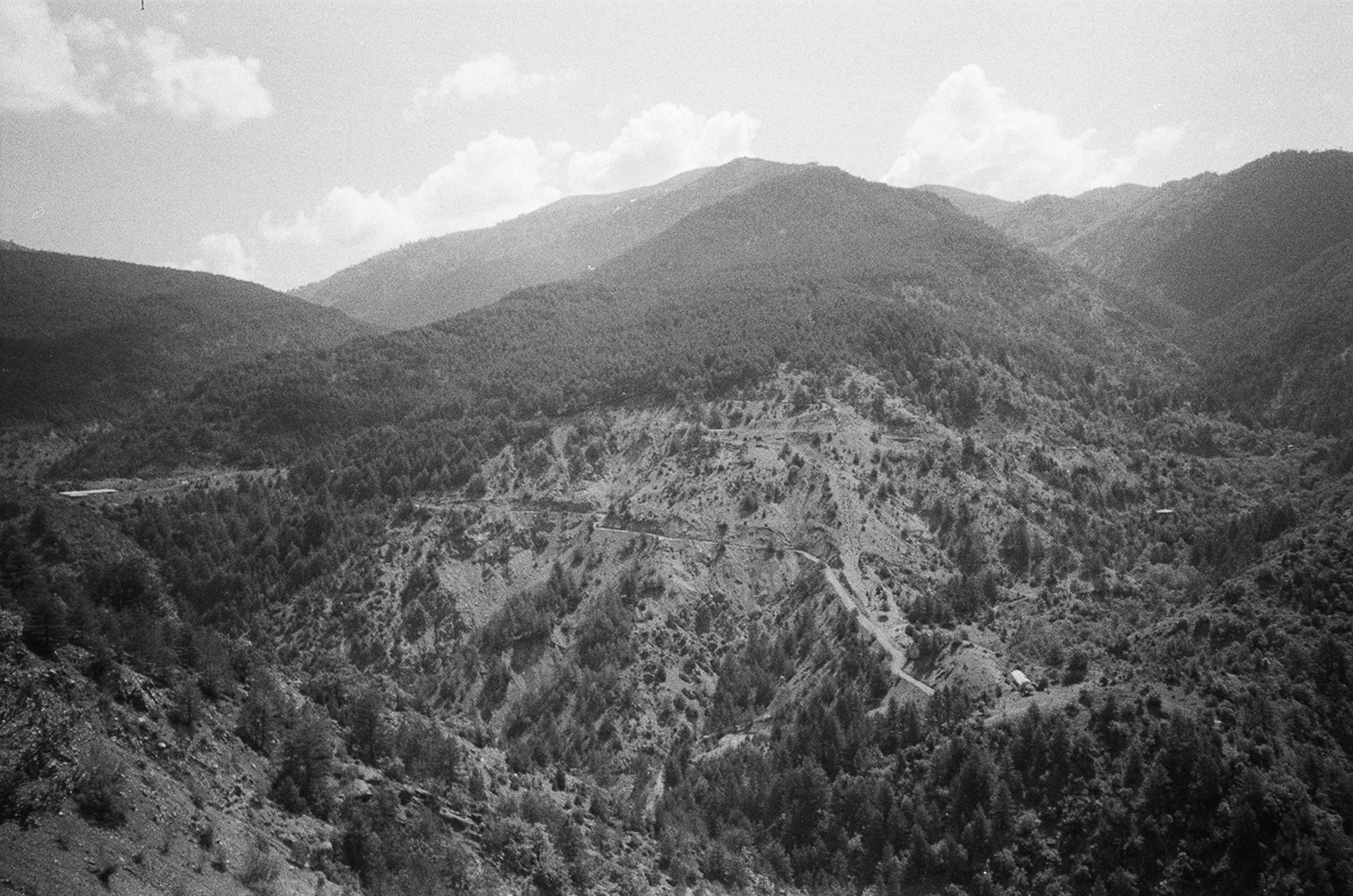
It’s the end of May and the weather is just fine, but there are reminders of why it’s called “the Devil’s Valley” in the Vlach language: lightning-struck trees standing among the lush green valley that stretches as far as the eye can see. Nature has its ways of grounding us.
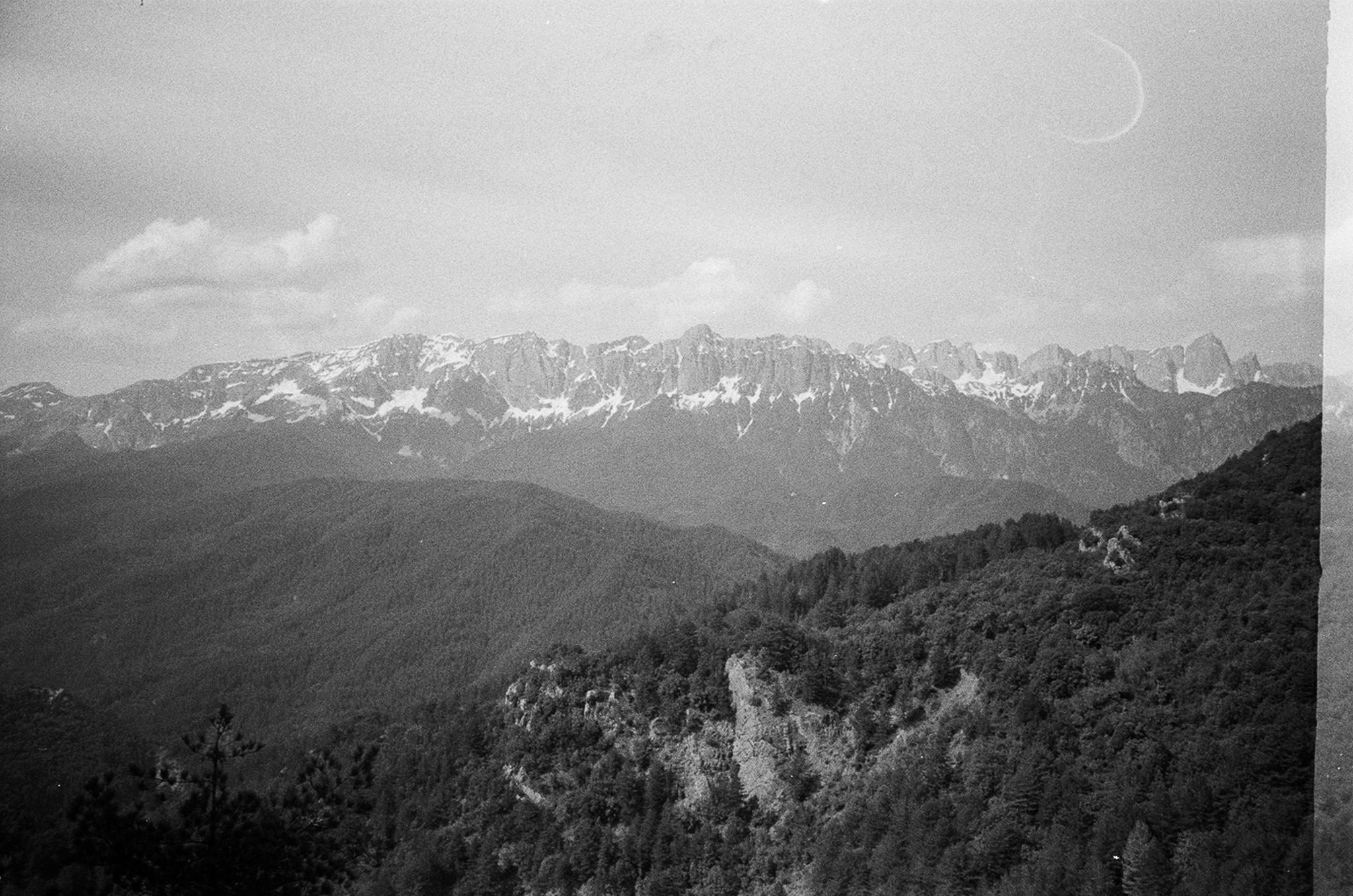
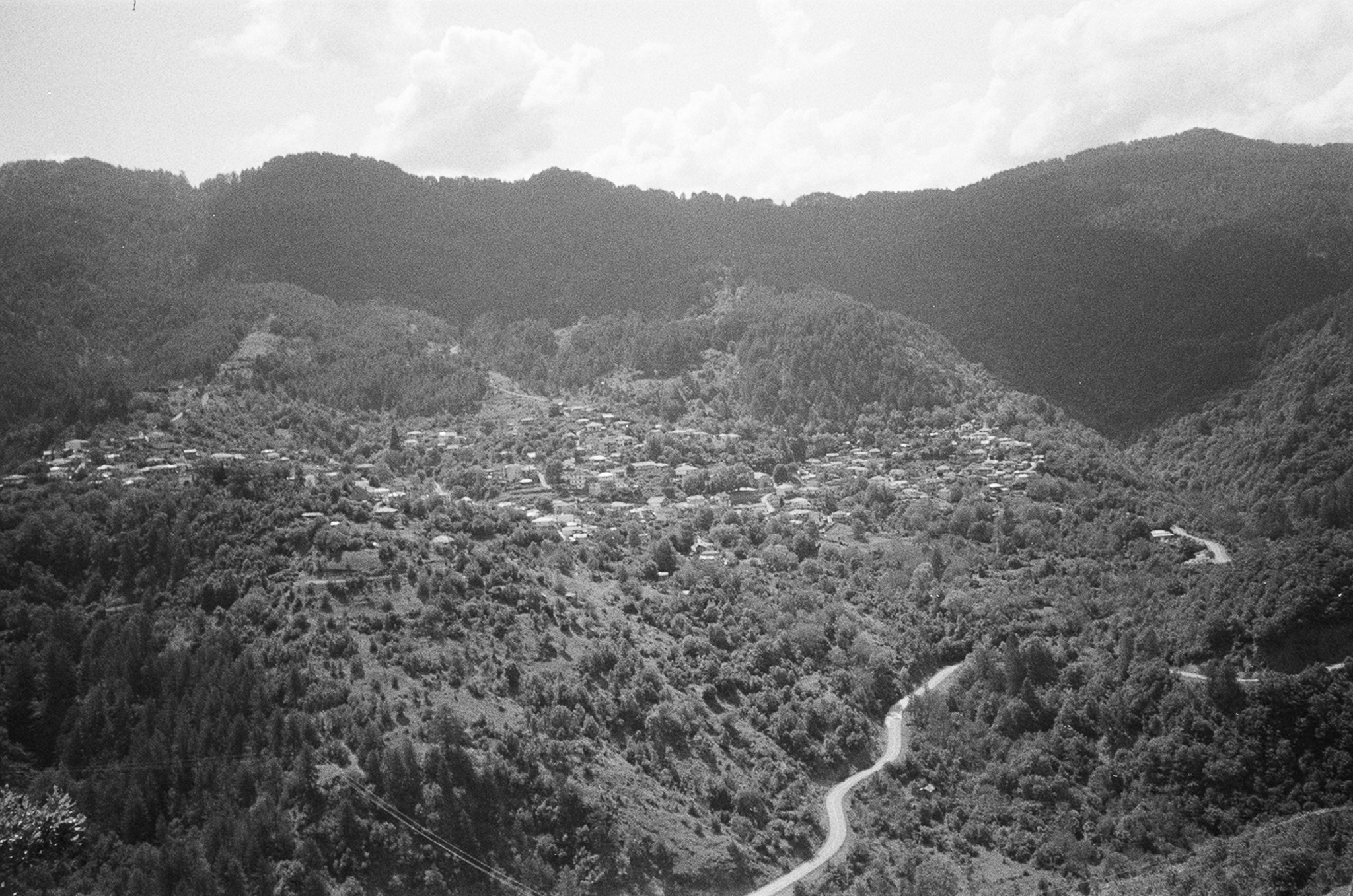
Reaching Samarina. The village claims the title of the highest village in Greece; at almost 1,600 metres, it had been on my list of places to visit for a while now. We stop for coffee and food, then head out again.
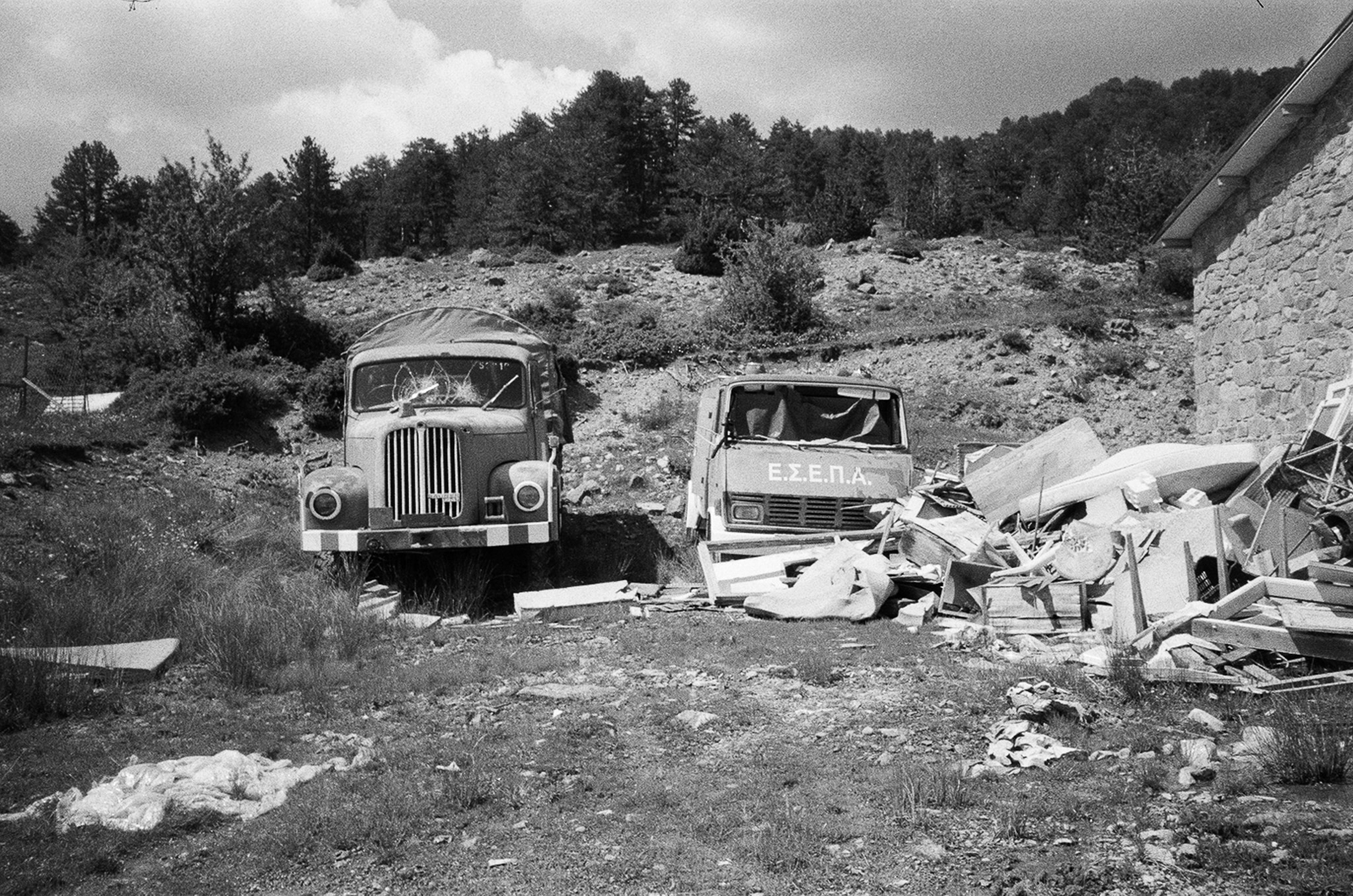
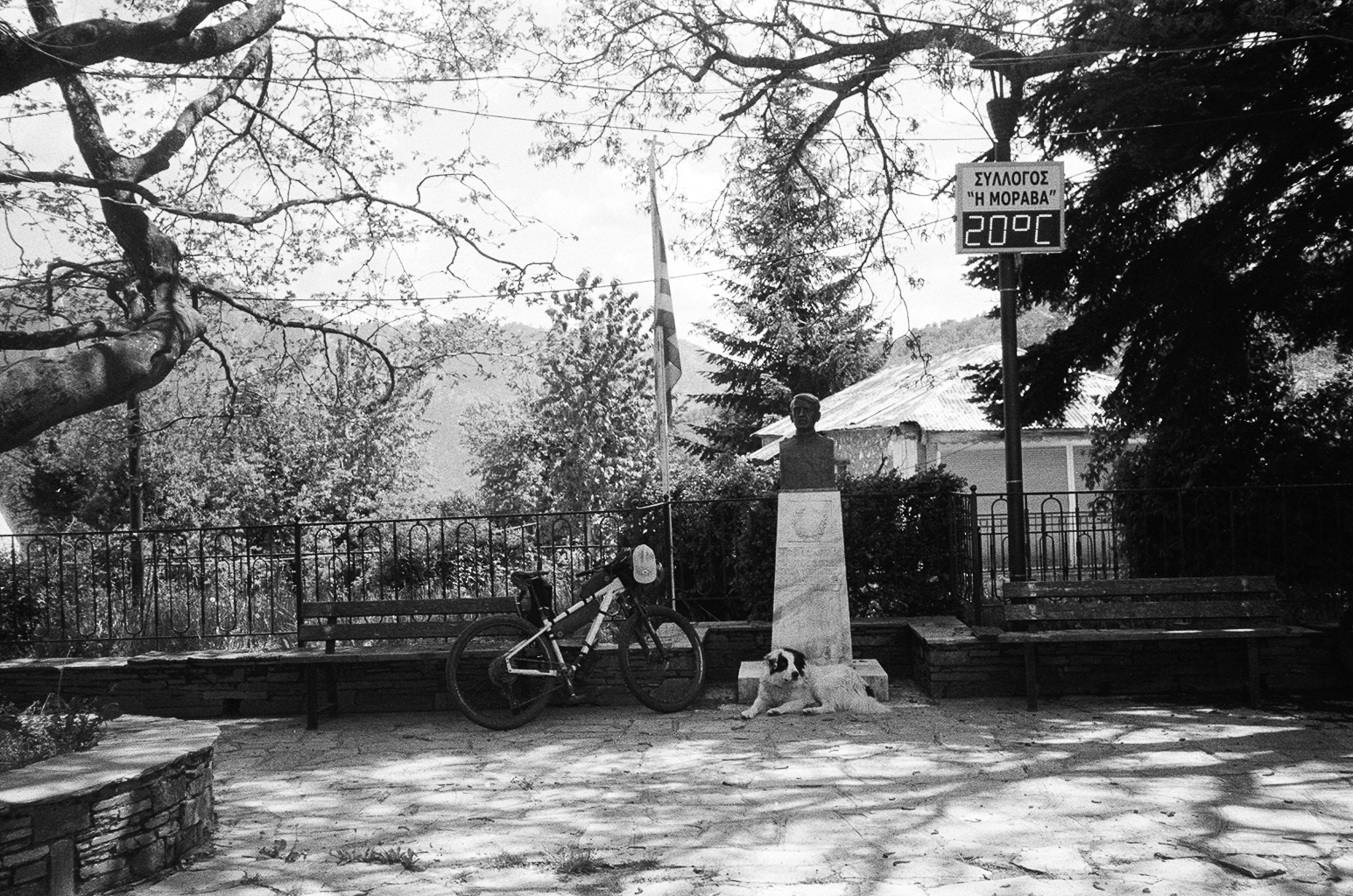
Slow pace. Full belly, empty head. It feels good to be on the road again. The bike feels light — it really isn’t. Inertia does its thing.
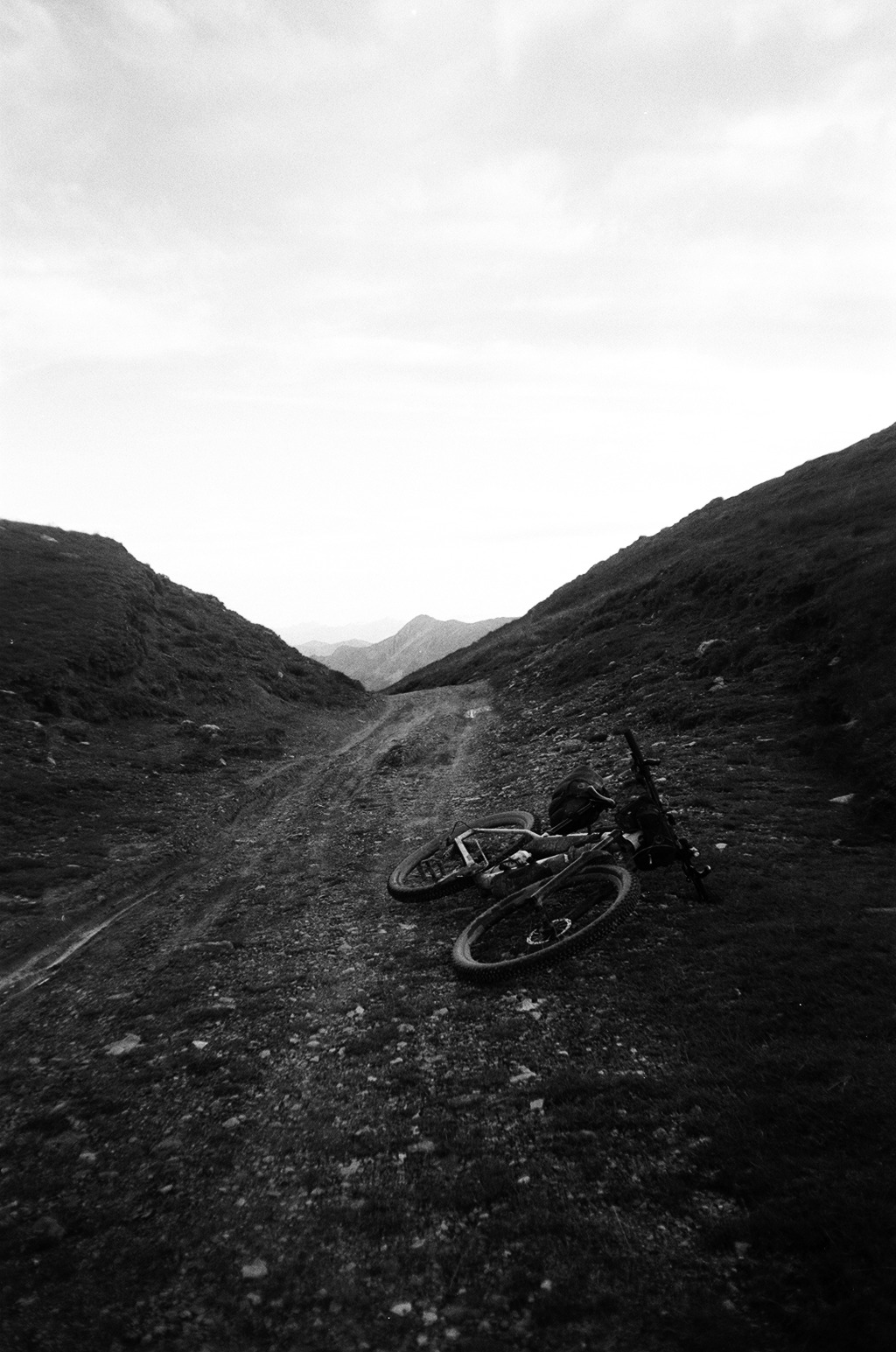
And just like that, we’re 10 km from Grevena. We stop at a church — a patio with a roof. It would be the perfect bivvy spot, if it weren’t for the mosquitoes swarming us, so we decide to sleep inside the church.
We often sleep in churchyards when bikepacking. There’s usually water, and always a porch and a roof to keep the rain off. Sometimes the back door is left open on purpose. In the countryside, churches serve as shelter from the elements.
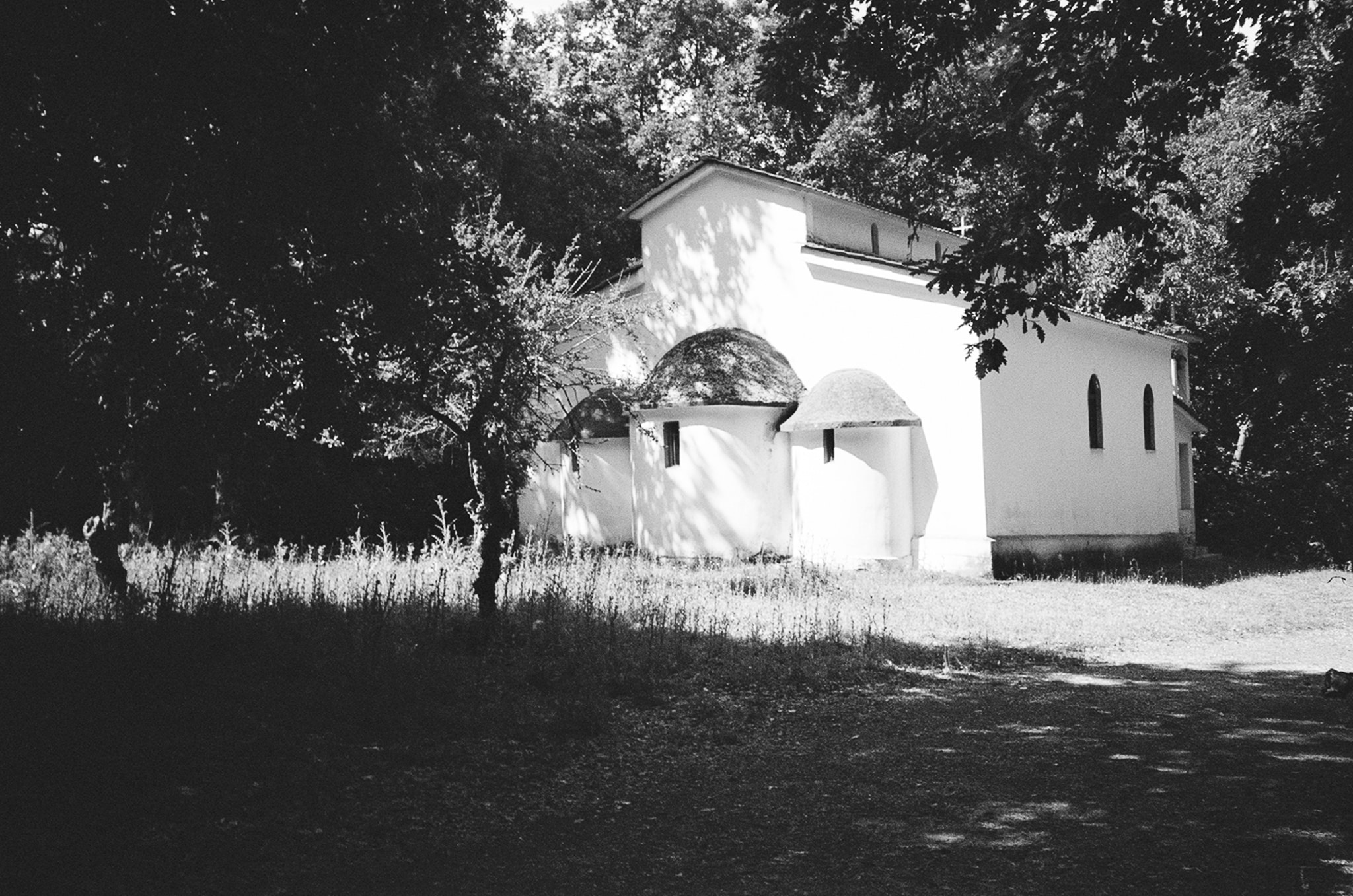
There’s nothing around here. We eat chocolate bars, crackers and nuts for dinner and call it a day as soon as the sun goes down. An empty church is awfully quiet. The reverb amplifies the rustle of our sleeping bags; my wristwatch sounds like a ticking time bomb. It’s all a bit surreal.
We wake with the first morning light, pack our bags and make our way into the city. The bus to Athens leaves at 9 a.m. I spend most of the ride taking notes and organising my thoughts. My mind is still racing.
Then I arrive in Athens. It’s Wednesday again — just not in my head. A week has already passed; it felt like a minute. The air is thick. The noise is deafening. Somehow the awkward silence of that church seems ideal now.
The return to the city.
Until the next adventure, the next race, the next time I get on my bike, I’ll keep this trip as a lesson in resilience and cherish the taste of freedom that bikes give us. No wonder why Susan B. Anthony* called the bicycle a freedom machine.
Notes
Brevet card* — a physical or digital passport used in long-distance cycling events to prove that a rider has completed a specific route within a set time limit.
Type 2 fun* — fun that isn’t fun while you’re experiencing it, only afterwards.
Susan B. Anthony* — an American social reformer and women’s rights activist who played a pivotal role in the women’s suffrage movement. In the 1890s, the bicycle gave women newfound freedom, challenging Victorian norms and allowing independent travel. Women swapped corsets for bloomers, embraced mobility and began to question their wider social limits. As Anthony put it in 1896, the bicycle had “done more to emancipate women than anything else in the world.”
*It is forbidden to republish/ use photographic material or any part of the article without the author’s consent.
Words & photography © λ3 by Peio Tofu
All photographs shot on film — Olympus Trip MD, Ilford XP2 and Agfa APX.
#lovenlivelife
You may also like


Loose Spokes: A 36-Hour Bikepacking Escape to Mount Ziria
A weekend bikepacking trip through Mount Ziria that reminds us: time doesn't stop, but sometimes it
Hellenic Mountain Race: A retrospective study on resilience.
A volunteer’s story from Checkpoint 1 of the Hellenic Mountain Race: a bikepacking trip across the
